How Do You Set Your Marketing Goal? A Beginner’s Guide to Building a Smart Growth Plan
- John Albury
- May 22
- 5 min read

Key Takeaways
• Marketing goals give your business a clear direction and help you focus on what matters most.
• Start by understanding your business needs, such as increasing sales, website traffic, leads, or brand awareness.
• Know your target audience so your marketing reaches the right people at the right time.
• Use SMART goals to create goals that are Specific, Measurable, Achievable, Relevant, and Time-based.
• Track your results regularly and adjust your strategy to improve performance and support long-term growth.
Imagine opening a new business and feeling excited about the future. You create social media pages, build a website, and start posting content. Weeks go by, but nothing seems to happen. You are spending time and effort, but you are not sure if you are moving in the right direction.
This is where marketing goals become important.
Many beginners jump into marketing without a plan. They want more customers, more website visitors, and more sales, but they do not know where to begin. A clear goal helps you focus your efforts and understand what success looks like.
If you are asking, How do you set your marketing goal?, this guide will help you understand the process in a simple way. You will learn how to create goals, avoid common mistakes, and build a marketing plan that supports your business growth.
What Is a Marketing Goal?
Simple Definition of a Marketing Goal
A marketing goal is something you want your business to achieve through your marketing activities.
Think of it like using a map before going on a trip. Without a destination, you can drive around and waste time. A goal gives you a clear direction.
Examples of marketing goals include:
• Increasing website traffic
• Getting more leads
• Growing social media followers
• Improving sales
• Building brand awareness
Why Marketing Goals Matter
Marketing goals help your business in many ways.
• They keep your efforts focused
• They help you use your budget wisely
• They make progress easier to track
• They help you make smarter decisions
• They support long-term business growth
Without goals, marketing can become random and confusing.
How Do You Set Your Marketing Goal?
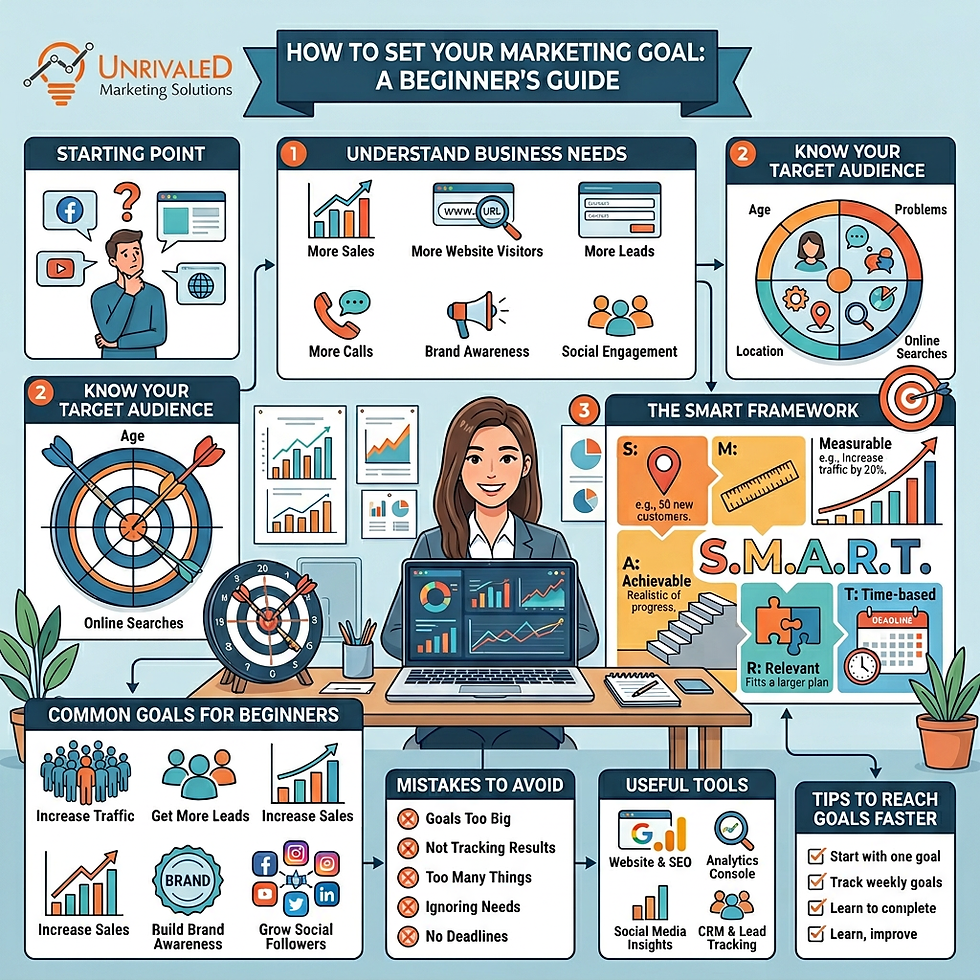
Setting marketing goals does not have to be difficult. Follow these simple steps.
Step 1: Understand What Your Business Needs
Before creating goals, ask yourself an important question:
"What does my business need most right now?"
Different businesses have different needs.
Ask yourself:
• Do I want more sales?
• Do I want more people visiting my website?
• Do I want more phone calls or inquiries?
• Do I want more brand awareness?
• Do I want more social media engagement?
For example, a new business may focus on becoming known in the local market, while an established business may want to increase sales.
Knowing your needs helps you create the right goals.
Step 2: Know Your Target Audience
You cannot reach everyone. Your marketing should focus on the people most likely to become customers.
Think about your audience:
• How old are they?
• What problems do they have?
• What are they interested in?
• Where do they live?
• What do they search for online?
Imagine you sell sports shoes. Your audience may include active people who enjoy fitness and outdoor activities.
When you understand your audience, you can create better marketing messages.
Step 3: Use SMART Goals
One of the easiest ways to create strong marketing goals is by using SMART goals.
SMART means:
• Specific
• Measurable
• Achievable
• Relevant
• Time-based
Let's understand each one.
Specific
Be clear about what you want.
Weak goal:
"I want more customers."
Better goal:
"I want 50 new customers."
Measurable
Use numbers so you can track progress.
Example:
"Increase website visitors by 20%."
Achievable
Set realistic goals.
Trying to grow from 100 visitors to 1 million visitors in one month is not realistic.
Relevant
Make sure your goal supports your business needs.
Time-based
Set a deadline.
Example:
"Increase website traffic by 25% within three months."
SMART goals make your plan easier to follow.
Example of a SMART Marketing Goal
Here is a simple example:
Increase website traffic by 30% within four months by improving SEO and publishing weekly blog posts.
This goal is clear and measurable.
Common Marketing Goals for Beginners
If you are new to marketing, these are some popular goals to consider.
Increase Website Traffic
More visitors can lead to more customers.
Ways to do this:
• Improve SEO
• Create helpful blog content
• Share content on social media
Get More Leads
A lead is a person who may become a customer.
Ways to generate leads:
• Offer free downloads
• Create contact forms
• Run online ads
Increase Sales
Many businesses focus on increasing revenue.
Ways to improve sales:
• Create better offers
• Improve website design
• Build customer trust
Build Brand Awareness
People usually buy from brands they recognize.
Ways to increase awareness:
• Post consistently
• Create useful content
• Stay active on social platforms
Grow Social Media Followers
A larger audience can help increase engagement and trust.
Mistakes People Make When Setting Marketing Goals
Beginners often make simple mistakes that can slow down progress.
Setting Goals That Are Too Big
Big dreams are good, but unrealistic goals can lead to frustration.
Start small and grow over time.
Not Tracking Results
If you do not track results, you will not know what works.
Always measure your progress.
Trying Too Many Things at Once
Some businesses try every marketing strategy at the same time.
Focus on one or two important goals first.
Ignoring Customer Needs
Marketing should solve customer problems.
Think about your audience before creating campaigns.
Creating Goals Without Deadlines
Without deadlines, goals can continue forever.
Always choose a time frame.
Tools That Can Help Track Marketing Goals
You do not need expensive tools to start.
Website and SEO Tools
Useful tools include:
• Google Analytics
• Google Search Console
These tools show website visitors, traffic sources, and search performance.
Social Media Tools
Social media platforms already provide useful insights.
They help track:
• Likes
• Shares
• Follower growth
• Engagement
CRM and Lead Tracking Tools
CRM tools help businesses manage customer information and sales opportunities.
Even simple systems can help organize leads.
Tips to Reach Your Marketing Goals Faster
These tips can help beginners stay on track.
• Start with one clear goal
• Track progress every week
• Create helpful and useful content
• Focus on improving SEO
• Learn from your results
• Make changes when needed
Marketing is not about being perfect. It is about learning and improving.
Conclusion
Setting goals is one of the most important parts of marketing success. If you have ever wondered, How do you set your marketing goal?, the answer starts with understanding your business needs, knowing your audience, and creating SMART goals.
You do not need a huge budget or years of experience to get started. Begin with simple goals, track your progress, and improve along the way.
Small steps today can create big results tomorrow.
Frequently Asked Questions (FAQs)
What is a marketing goal?
A marketing goal is a specific result a business wants to achieve through marketing activities. It can include getting more customers, increasing website traffic, improving sales, or building brand awareness.
Why are marketing goals important?
Marketing goals help businesses stay focused, measure progress, and make better decisions. They also help save time and money by creating a clear direction.
What is a SMART marketing goal?
A SMART marketing goal is a goal that is Specific, Measurable, Achievable, Relevant, and Time-based. It helps businesses create realistic and trackable objectives.
How do beginners set marketing goals?
Beginners can start by identifying business needs, understanding their target audience, creating SMART goals, and tracking results regularly.
How often should marketing goals be reviewed?
Marketing goals should be reviewed regularly, such as every month or every quarter, to measure progress and make improvements if needed.
Comments