What Do Digital Marketers Do? A Beginner’s Guide to Online Marketing
- John Albury
- Feb 18
- 5 min read

Key Takeaways
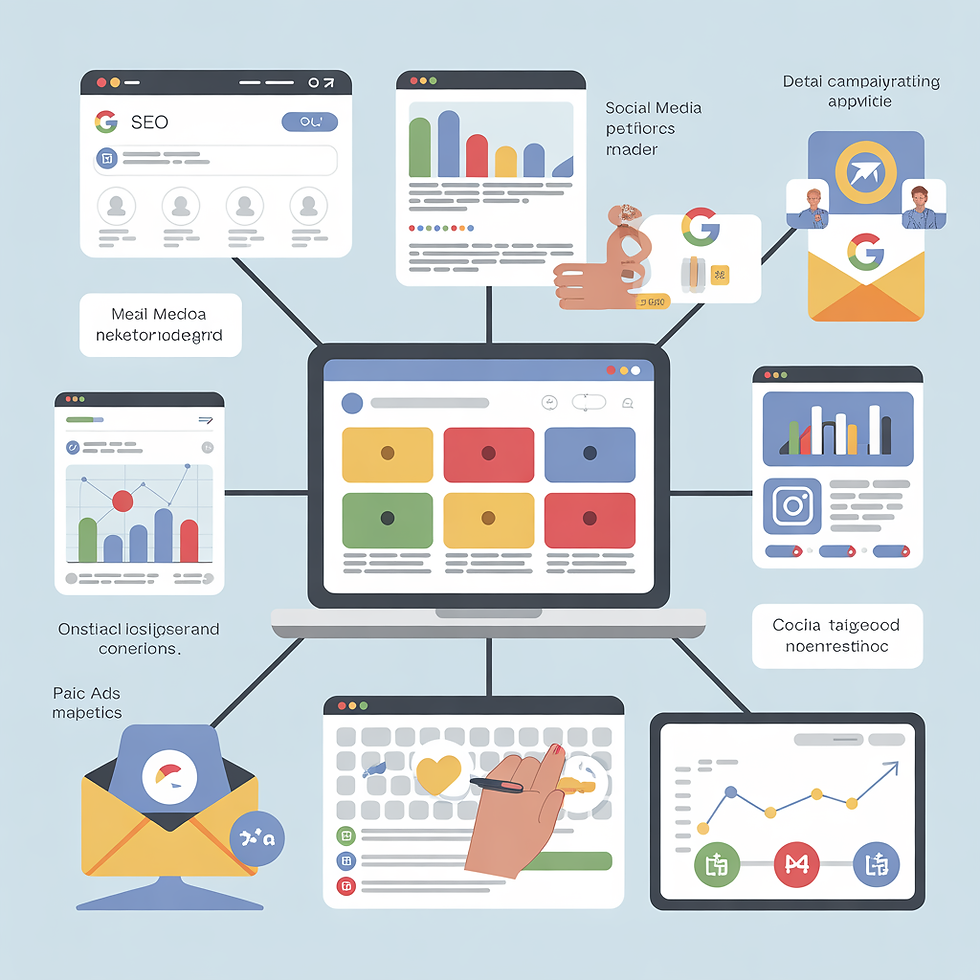
Digital marketers use online channels like SEO, social media, email, and paid ads to help businesses reach the right audience and grow online.
They plan strategies, create content, and manage campaigns to increase visibility, engagement, and conversions.
Tracking data, analyzing results, and adjusting campaigns are essential parts of their role to ensure marketing success.
Building brand awareness, trust, and consistent messaging online is a core responsibility that strengthens long-term business growth.
Understanding the Role of Digital Marketers
If you’ve ever wondered how businesses grow online, digital marketers are the people behind it. They use the internet to reach customers, build brands, and increase sales. In simple terms, digital marketers plan, create, and manage online strategies that help businesses get noticed.
For beginners, digital marketing can seem confusing. There are so many terms: SEO, PPC, social media marketing, email campaigns, analytics, and more. But the main goal is clear: connect businesses with the right audience at the right time.
This guide explains what digital marketers do and how they help businesses succeed in the digital world.
1. Understanding Digital Marketing
Digital marketing is the practice of promoting products, services, or brands using online channels. Unlike traditional marketing methods like TV or print ads, digital marketing focuses on the internet.
Some common channels include:
Search engines – Google, Bing, Yahoo
Social media – Facebook, Instagram, LinkedIn, Twitter
Email marketing – Newsletters, promotions
Websites and blogs – Content that attracts and informs users
Digital marketers use these channels to reach people where they spend time online. They create strategies that are measurable, allowing businesses to track results and adjust campaigns for better performance.
2. Creating Marketing Strategies
A digital marketer’s work begins with planning. They develop strategies that define goals, target audiences, and the methods to reach them.
Key steps include:
Setting clear goals – Increase website traffic, boost sales, generate leads
Identifying target audiences – Understanding who the customers are, what they need, and where they spend time online
Choosing channels – Selecting the best platforms like Google, Instagram, or email for the campaign
Planning content and campaigns – Scheduling posts, ads, and promotions to match audience behavior
A solid strategy ensures all marketing activities are focused and effective.
3. Content Creation and Management
Content is the core of digital marketing. Digital marketers create and manage content that informs, engages, and convinces people to take action.
Tasks include:
Writing blog posts and website pages
Creating social media posts and videos
Designing graphics and infographics
Making sure content is SEO-friendly
The goal is to provide value to the audience while improving visibility on search engines. Consistent, quality content builds trust and helps businesses stand out.
4. Search Engine Optimization (SEO)
SEO is a crucial part of digital marketing. It helps websites appear in search engine results so that people can find them online.
Digital marketers focus on:
Keyword research – Finding what people search for related to the business
On-page SEO – Optimizing website pages with proper headings, meta titles, and descriptive content
Off-page SEO – Building links from other websites to improve authority
Technical SEO – Ensuring fast page speed, mobile responsiveness, and easy navigation
SEO is a long-term strategy that drives organic traffic and improves credibility.
5. Managing Paid Advertising (PPC)
Some marketing campaigns require paid ads. Pay-per-click (PPC) campaigns allow businesses to pay for top placements on search engines or social media.
Digital marketers:
Set budgets and bid strategies
Create ad copy and visuals
Target specific audiences based on location, age, or interests
Monitor performance and adjust campaigns to maximize ROI
PPC gives fast results and complements organic SEO efforts.
6. Social Media Marketing
Social media is a powerful tool for connecting with audiences. Digital marketers use it to build brand awareness, share content, and engage with customers.
Activities include:
Scheduling posts at optimal times
Responding to comments and messages
Running social media ad campaigns
Analyzing engagement metrics to improve future posts
Social media marketing is all about creating meaningful interactions that increase loyalty and trust.
7. Email Marketing
Email marketing remains one of the most effective ways to communicate with customers. Digital marketers use it to nurture leads and encourage repeat purchases.
Key tasks include:
Building email subscriber lists
Creating newsletters and promotional campaigns
Segmenting audiences for targeted messages
Tracking open rates, click-through rates, and conversions
Well-crafted email campaigns maintain customer relationships and boost sales.
8. Data Analysis and Reporting
Digital marketing is measurable. Marketers rely on data to make informed decisions.
They track:
Website traffic and visitor behavior
Conversion rates from campaigns
Engagement on social media
ROI for paid ads
By analyzing data, digital marketers improve strategies and ensure resources are spent effectively.
9. Building Brand Awareness and Engagement
A digital marketer’s work is not only about selling but also about building trust and recognition.
They focus on:
Maintaining consistent branding across all channels
Responding to customer feedback online
Creating campaigns that engage and educate audiences
Strong brand awareness increases customer loyalty and makes future marketing more effective.
10. Keeping Up With Trends and Tools
The digital world changes quickly. Digital marketers must stay updated on:
New social media platforms and features
Search engine algorithm updates
Emerging tools for automation, design, and analytics
Continuous learning ensures marketers can implement the latest strategies and stay ahead of competitors.
Conclusion:
Digital marketers wear many hats. From planning strategies and creating content to managing ads and analyzing data, their role is essential for businesses that want to succeed online. For beginners, understanding these tasks is the first step toward appreciating the impact of digital marketing.
Businesses that invest in skilled digital marketers can reach the right audience, improve brand visibility, and grow revenue. Whether you are a business owner or a student learning marketing, knowing what digital marketers do provides insight into how the online world functions.
Frequently Asked Questions (FAQs)
What is the main role of a digital marketer?
A digital marketer plans, creates, and manages online marketing campaigns to help businesses attract, engage, and convert customers across channels like social media, search engines, email, and websites.
Do digital marketers need technical skills?
While advanced technical skills are not required for beginners, knowledge of SEO, analytics tools, social media platforms, and basic content creation helps digital marketers perform more effectively.
How does SEO fit into digital marketing?
SEO (Search Engine Optimization) helps websites rank higher on search engines, making it easier for potential customers to find a business online. Digital marketers use SEO to drive organic traffic and improve visibility.
What is the difference between organic and paid marketing?
Organic marketing focuses on unpaid strategies like SEO, content creation, and social media engagement, while paid marketing uses ads such as PPC campaigns to reach a targeted audience quickly.
Why is data analysis important for digital marketers?
Data analysis helps marketers understand how campaigns perform, identify trends, and make informed decisions. Tracking metrics like traffic, conversions, and engagement ensures that marketing efforts are effective and resources are well-used.

Comments